
20 COMMON SKIN ISSUES
(that you don't have to put up with)
Effective treatment of Thread Veins, Milia, Skin Tags, Blood Spots, Common Warts, Plane Warts, Seborrhoeic Warts, Verrucas and Age Spots are well within the grasp of modern electrolysis techniques.
From my home clinic in Richmond North Yorkshire, I offer a friendly confidential service. Contact me for a free consultation, and my clients are happy to recommend my honest professional service.
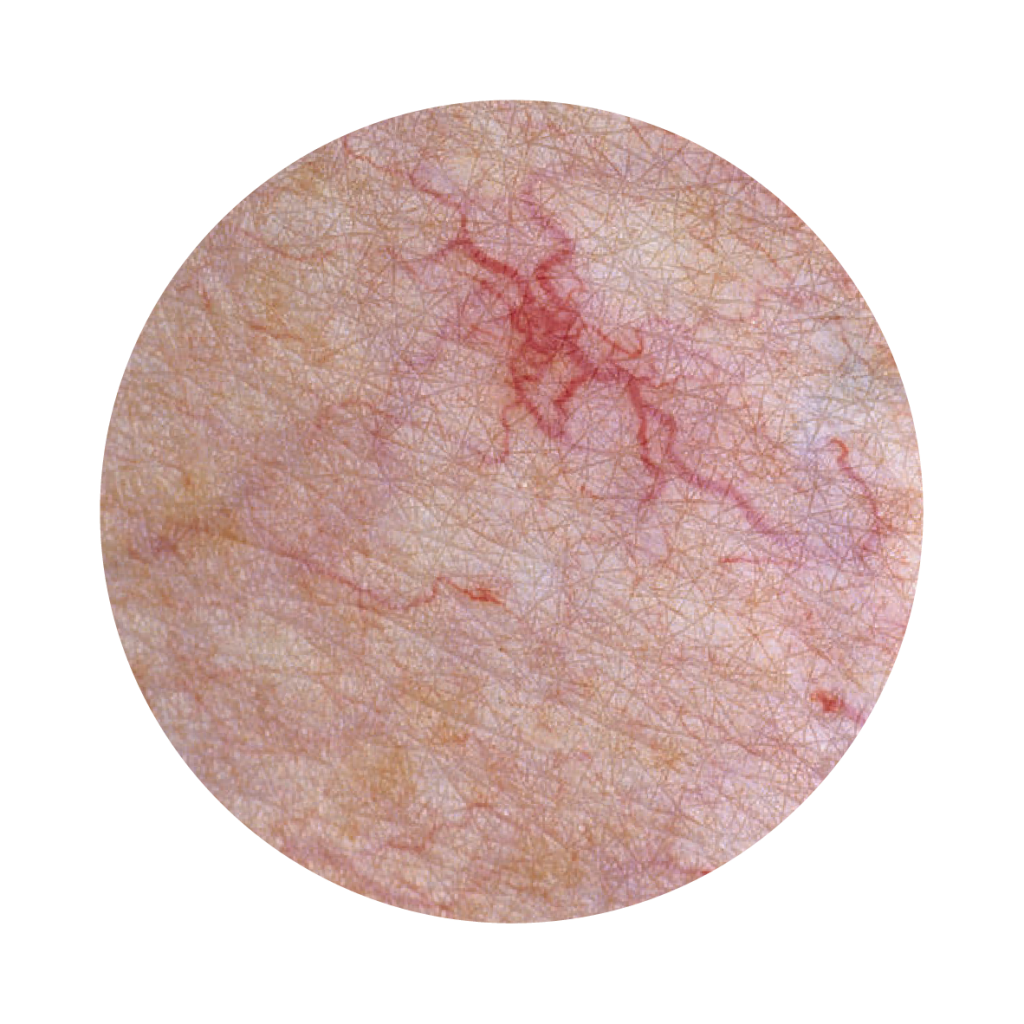
SPIDER NAEVUS
A Spider Naevus consists of a central dilated blood vessel, with smaller capillaries radiating from it like legs of a spider. They can be found in isolation or gathered together in clumps on areas such as the cheeks.

BLOOD SPOTS
Bright red, superficial vascular blemishes. These are often dome shaped, or slightly raised and are frequently found on the midriff. Most people aged over 30 have at least one and they are often more common in men than in women.

THREAD VEINS
These are permanently dilated capillaries. They have very thin walls which constantly dilate and constrict. As we age, these vessels lose their elasticity and can become permanently dilated. There are numerous causes including: ageing, sun damage, hereditary, pregnancy, trauma, exposure to harsh weather, hormonal changes and skin fragility are also common causes.

WARTS
There are various types of warts including plane warts, common warts, filiform warts and verrucas and all can be easily and successfully treated using electrolysis. These type of warts can develop individually or in clusters and are highly contagious.

MILIA
These are tiny, white, hard, round spots containing keratin which lie superficially under the surface of the skin. Their cause is unknown although they are often associated with dry, dehydrated skin.

SKIN TAGS
Skin Tags are often found in areas of friction such as the underarm, groin, under the breasts or around the neck where necklaces and collars irritate. They often appear with a stalk like a mushroom and vary in size from a tiny speck, smaller than a grain of uncooked rice, to the size of a large pea, occasionally even larger than that.

DERMATOSIS PAPULOSA NIGRA
This is a common papular disorder which develops in adolescence on black skin and is identified by smooth, dome shaped, brown to black papules seen mainly in the cheeks, neck and upper chest.

SEBORRHOEIC KERATOSIS
Although these are classified as part of the wart family they are not contagious, they are very common on the head face and body. Associated mainly with increasing age, mature skins and sun damage. Growing up to two inches wide, they are often dry, crusty and considered cosmetically unattractive.

COMMON WARTS
Common warts are firm, raised growths often with a rough, dry, crusty surface, which resemble a very small cauliflower or a solid blister. Rough to the touch, common warts may feature a tiny pattern of black dots, sometimes called seeds, which are small, clotted blood vessels.
HOW ARE THEY TREATED?
Energy is released over the whole surface of the wart by the use of a small probe tapping on the affected area. The probe is then inserted into the wart and energy released (except facial warts) destroying the virus and sealing off the blood supply to the wart.

PLANE WARTS
Plane warts are small flesh coloured or pigmented blemishes, very slightly raised, often dry or crusty, flat topped lesions, which most commonly appear on the decolletage. Electrolysis is a safe, effective, quick and affordable method of treating Plane Warts.

SEBORRHOEIC WARTS
A benign proliferation of epidermal cells with ‘stuck on’ appearance and ‘lip’ or distinctive edge. Easily treated by diathermy, but it is always advisable to obtain GP’s advice and agreement

VERRUCAS
Verrucae develop on the soles and toes of the feet. A verruca starts as a tiny pink area which may be speckled with black dots and can become dark with a rough crumbly layer of skin with a ‘pepper pot’ appearance.
HOW ARE THEY TREATED?
Energy is released over the whole surface of the wart by the use of a small probe tapping on the affected area. The probe is then inserted into the wart and energy released (except facial warts) destroying the virus and sealing off the blood supply to the wart.

AGE SPOTS
Age Spots (sun spots, liver spots, brown spots) are changes in skin colour associated with older skin. They’re usually caused by the skin being exposed to the sun over many years and are a sign of sun damage.

SYRINGOMA
Benign non contagious flesh coloured elevations of the skin. Treatment of Syringoma on the lower eyelids and upper cheeks is common but they can form in other areas such as the forehead.

CHERRY ANGIOMAS
Red-coloured moles, or cherry angiomas, are common skin clumps that could develop on many areas of the body. Could be also known as senile angiomas. They’re typically found on men and women aged 30 and older. Typically the collection of small blood vessels inside a cherry angioma provide them with a reddish physical appearance.

PIGMENTATION MARKS
Hyperpigmentation can be caused simply by sun damage, inflammation, or even other skin injuries, which includes those associated with acne. People with darker pores and skin tones are more vulnerable to hyperpigmentation, especially together with excess sun exposure.

SEBACEOUS HYPERPLASIA
Is a common, non contagious, benign condition caused by inflammation of the sebaceous glands in adults of middle age or older.
Lesions can be single or multiple and manifest as yellowish, soft small papules on the face, particularly on the nose, cheeks and forehead. They often look like milky, yellow doughnut shaped lesions.
HOW ARE THEY TREATED
There are different techniques depending on the size, age of the lesion and location. individual lesions generally only need one treatment.

XANTHALASMA
These are deposits of fatty materials, under the surface of the skin ranging in size from very small up to one inch in diameter.
The cause is unknown but is associated with an elevated cholesterol level. They are commonly seen on the eyelids. Treatment can visibly reduce the raised appearance.

MOLE REDUCTION
Moles are common blemishes on the skin which vary in size and colour and most average young adults will have up to 25.
HOW ARE THEY TREATED
Electrolysis is a safe, effective, quick and affordable method of visibly reducing the appearance of totally healthy moles.
No excision/cutting is made and nothing is sent away for investigation. Cells are composed of 80% liquid and a small probe is quickly tapped over the whole surface of the mole and the high frequency radio waves cause the liquid to evaporate.
A scab will form and should be left to fall away naturally. A full consultation is carried out prior to treatment for each individual mole and if there is any cause for concern over the mole then treatment will not proceed.